

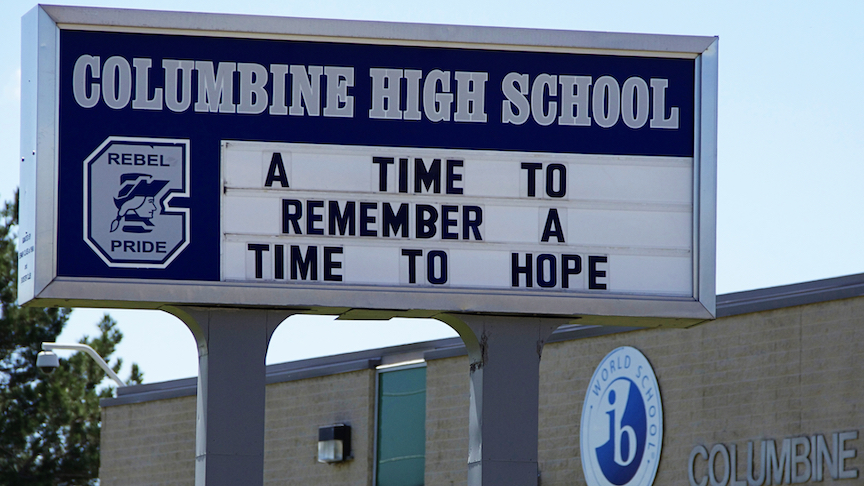
Immediately following the Columbine tragedy that rocked the world twenty years ago (4-20-1999), Frank DeAngelis vowed that he would remain the school’s principal until the class of first grade students in the elementary schools that fed into the high school had graduated. His goal was to prevent a mass exodus of faculty and staff and restore peace and stability to a deeply wounded community.
Reflecting on the aftermath of this horrible crisis, DeAngelis sat down to tell me that the only way he was able to keep his people from leaving to another school or job was to remain extremely accessible, and to keep everyone openly communicating and focused on a brighter future.
“The thing I had to stress after this crisis is that different people were in different places. I had staff who wanted to go right back in and teach algebra, some who wanted to immediately open up and talk about their experience on that day, some who didn’t want to talk at all about what had happened, and a lot of teachers and staff who fell somewhere in between. I had to respect where each individual was at various times throughout the harrowing process and let them know that I supported them 100 percent regardless of how they felt.
I never was a “sit behind the desk” office principal. I always spent at least one hour a day in the classrooms with my teachers, but after the crisis my visibility became even more important. My staff needed to see me, to read my expression, and to know that I wasn’t going anywhere. I had to remind them that we are only as strong as each and every person on our staff and assure them that Columbine is an incredible school and that our best days were still to come.
Most importantly, I spoke from the heart. I can remember someone telling me that leaders who cry lose all their power. I respectfully replied that if the situation warrants my getting emotional, I’m going to be emotional, and if that type of leader can’t lead this community then I guess I’m finished. I refuse to be someone I’m not. Allowing others to see my pain, my human side, didn’t push people away; instead, it brought them closer. They saw in me someone who was willing to listen to varying opinions with an open mind. I didn’t just make decisions and then walk away. I shared the reasons why I was making difficult decisions and enacting changes that affected them. But above all, I continued to tell them and show them that I cared about them as individuals and assured them that we would get through this.”
That message worked then, and it still works today.
An overwhelming percentage of the staff who were at Columbine on that dreadful day stayed on for four years until the freshman class graduated in 2002. In fact, out of the 146 staff who were there when this happened, 39 were still on staff when I interviewed Frank before his retirement in 2014. Amazing.
ON POINT – An individual’s ability to lead others is rarely exposed on the road to victory, but on how they are able to keep their people together and dedicated to a seemingly impossible goal after suffering a devastating loss.