

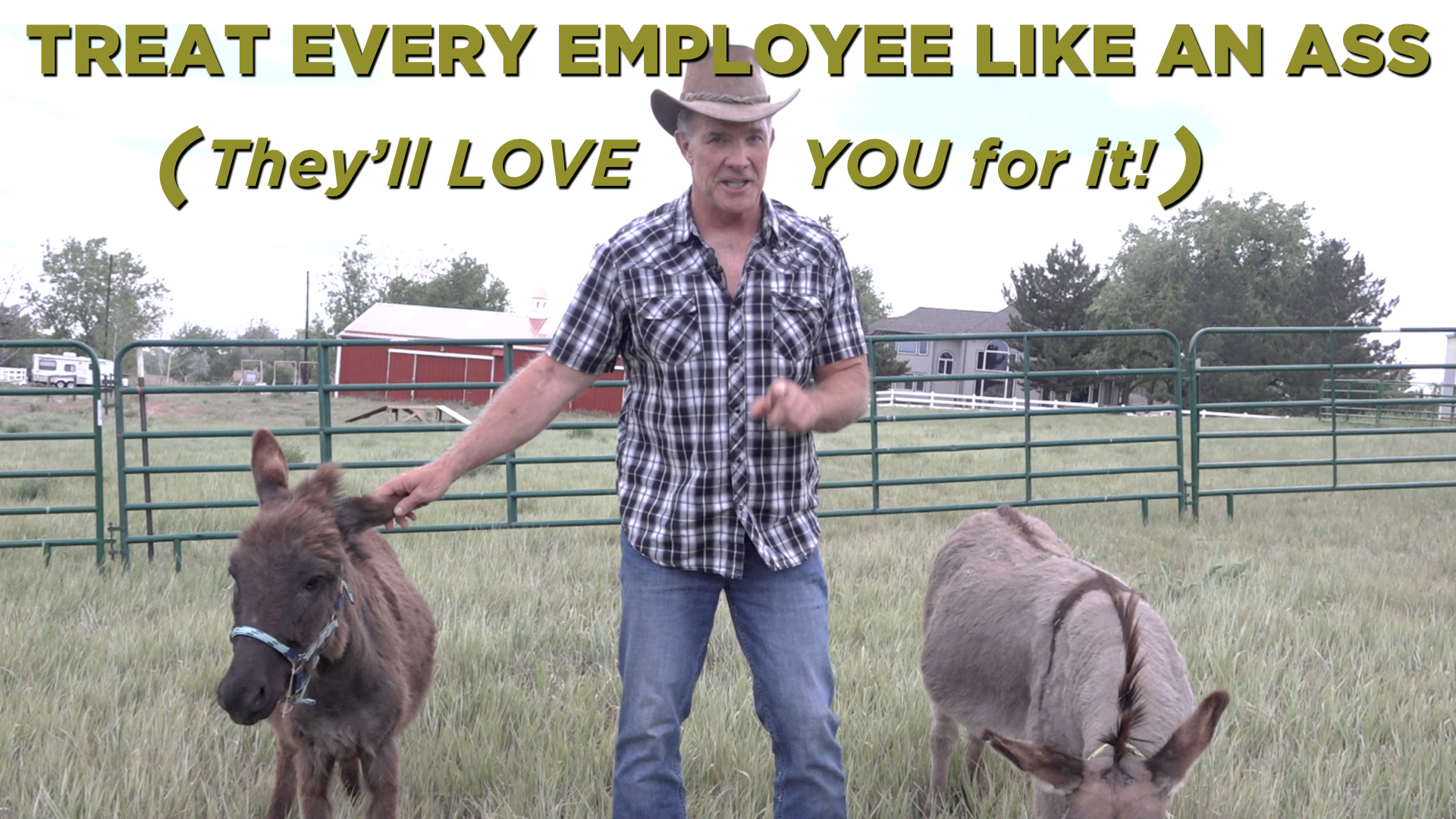
Do you treat your people like assets or asses? You should do both.
I like dogs. I can stand cats, but I’m a dog guy. My bride Lori loves dogs and cats and for that matter, all living things. She’s crazy about animals. In fact, months ago, she started bugging me to get a donkey. But I put my foot down and sternly said NO! So we compromised and now we have three miniature donkeys as pets. (Funny, a year ago, I didn’t even know there was such a thing as a miniature donkey.)
Through the ages, donkeys have earned the label as the beasts of burden, and they are perhaps the most misunderstood and they are certainly the most abused animals in all of nature. How would you like it if scientists referred to you as a jackass?
But donkeys are smart, strong, stable, and sturdy. And they are incredibly sweet and lovable. And as much as I didn’t want to be a donkey owner when my wife first pitched the idea, I have grown to love Opie, Fiona, and Elway. (Look, I’m a lifetime Bronco fan, so there’s a very good reason why I named the leader of the group, Elway.)
We’ve had them less than a year, and there is still much to learn, but helping my wife Lori feed and care for our donkeys reminds and reinforces the basic principles of motivation and performance that some business owners and managers forgot long before the COVID pandemic shut us down.
For starters, unlike their equine horse cousins, donkeys aren’t easily frightened. They are remarkably calm with the cognitive ability to reason. They think before they move, that’s why they have the reputation for being stubborn. It is extremely difficult to force or threaten a donkey into doing something it sees as contrary to its own best interest or safety.
That’s why you never try to pull a donkey to the place you want him or her to go. Instead, you gently lead them in a direction and praise them as they move toward the goal.
Same goes for the kids we raise and the employees we manage, doesn’t it?
Training a donkey relies upon showing him or her, not merely by words but also by action, that they can trust you to protect them from harm. Trust is a sacred value to this breed. When we got Opie and Elway six months ago, they ran from us. It took time for them to know we were not a threat, and now they have bonded to us and are remarkably loyal. We just got Fiona, and she is skittish. We are working on building a relationship with her and know that it will take time. But it will be well worth the investment.
With donkeys or humans, it’s simple.
Rules without a relationship lead to rebellion.
Lastly, donkeys are social creatures, so like Lays potato chips, you can’t have just one. They crave companionship, but they don’t discriminate. They’ll be fine as long as there’s a horse, a pig, a goat, something to keep them company. But when in a herd, they always choose the strongest donkey to be their leader. That donkey is fiercely protective of the others. In fact, they will stay back to ward off an attack by a predator so the other donkeys can escape to freedom even if it means that their own life is in jeopardy.
If COVID has taught us anything, it’s that we all look to a leader in times of risk, someone who values our safety even above their own. And people, like donkeys, are social creatures that long to be around each other and crave a leader who will bring us together, make us a part of something bigger and have our backs no matter what.
So now is the time to stop pulling and start leading by remaining calm, earning trust, and being courageous defenders of our people.
Click here to download 33 Timeless Truths to Create and Sustain an Invincible Workforce in a Post-Covid World.
You might also benefit from reading:
Why You Should Level UP Your Image When Working from Home
We Will Cure Coronavirus but WHAT Will Cure Entitlement?
10 Ways to Encourage Employees to Take Ownership in Their Work
Through electrifying keynote speeches and actionable books, Hall of Fame award-winning speaker Eric Chester helps leaders of the world’s top corporations, franchises, and associations attract, recruit, manage, engage, motivate, and retain the right employees.