

Businesses and brands that are replacing service workers with technology are discovering that this strategy is creating as many problems as it’s solving.
Robots (the broad term I’ll use to describe digital kiosks and various other mechanical systems) are diligent, and they don’t call in sick. They won’t cheat you. They won’t ask for a raise. And they won’t abandon you for another job that’s paying 50 cents more per hour down the street.
But here’s the thing: Robots break. And machines never last.
And if they’re connected to the Internet, that connection can go down, or worse, the system can be hacked and destroyed from across the planet.
What’s more, robotic kiosks are expensive to acquire, hard to repair, and they can become obsolete overnight.
And not everyone over 40 knows how to use them, or wants to be served by a non-human automaton.
Your frontline workforce grew up with technology and, as a result, most are considerably more techno-savvy than their parents, teachers, and employers. But to be worthy of the ever-increasing minimum wage requirements, they must also know how to implement creative workarounds when the Internet is down and your digital equipment is in a state of disrepair.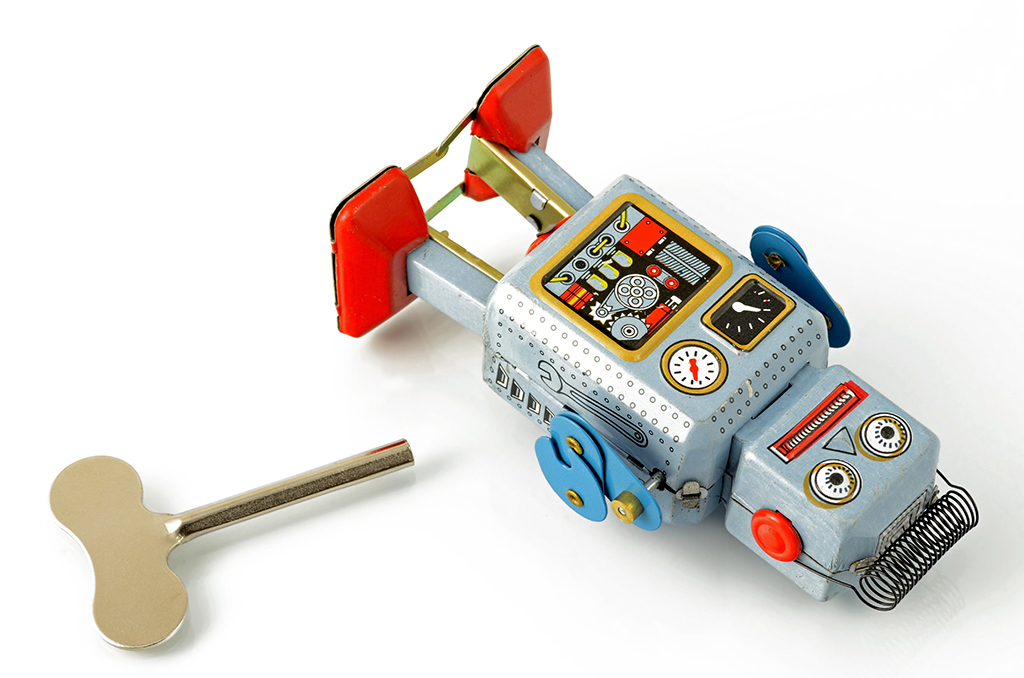
CASE IN POINT
I recently had a meal prepared at a national ‘fast-casual’ burrito chain. It’s the kind of restaurant where the worker assembles the meal in front of you as you walk down the sneeze guard window in front of you.
When I got to the cashier, I asked for a Diet Coke to go with my order.
“The Diet Coke tube on our new soft drink dispenser is jammed today, and no one here knows how to unclog it,” the cashier told me.
I wanted to sit down and enjoy my customized burrito, but I was now being informed that no sugar-free drinks were available on the premises.
“Miss, this restaurant shares a parking lot with a large discount grocery store,” I said to the cashier. “In five minutes, for less than $10, you could have five two-liter bottles of Diet Coke on hand to keep customers like me happy. That would probably be enough to get you through the dinner rush. And at the price you charge for a Diet Coke, you’d triple the owner’s money before you even opened the second bottle!”
“We have no process for that,” she said. “I have no idea how to open this register to get $10 out, and if I could open the register, the cameras would catch me and I’d get fired.”
My quiet mealtime break was instantly compromised, and I left with an unfavorable impression of this restaurant, and the entire chain. I won’t be back soon.
Technology is essential to your success. But if your employees are unwilling or unable to provide an intelligent human interface, they’re essentially the human equivalent of a defective robot.