

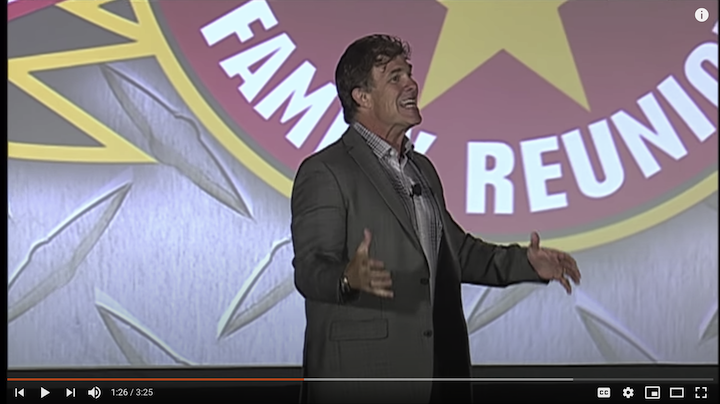
Back in 2013 I posted a YouTube video explaining why millennials (teen and young adult workers) hated being paid by the hour. With more than 350K views and a lot of controversial comments, it  became apparent that I had struck the nerve that often separates employers and employees. But business owners wanted more – they needed an alternative strategy.
Well, in addition to writing books and giving keynote presentations on employee engagement and workforce related issues, I also designed, built, and currently operate a castle-themed car and dog wash near my home in Golden, Colorado. My workforce is comprised of four young adults, ages 16-to-35, on whom I rely very heavily to keep this “kingdom” clean and running smoothly. Quite a challenge, because so many of the tasks are dirty, unsexy, and janitorial in nature, while many other tasks require an almost expert ability to repair and maintain sophisticated hydroelectric computerized equipment.

With such a wide range of responsibilities requiring both technical skills and a determined work ethic, I wondered how I could effectively pay and incentivize my crew to be on fire for Camelot Car & Dog Wash. It caused me to explore the compensation principles and strategies I’ve been writing and speaking about for more than a decade – – and I knew I couldn’t pay them based solely upon the hours they worked.
As you know, low performing employees want to be paid for their time because it gives them a guaranteed paycheck. To come out ahead, it is to their advantage to do the least amount of work for each time unit they they put in. Being efficient and working hard means they will finish tasks sooner, so they will either be sent home early resulting in a smaller paycheck, or they will be disincentivized for their efficiency by having even more work piled on their plate.
Hourly pay puts the employers and their employees on different sides of the compensation equation and motivates each to push hard in the opposite direction.
Conversely, no top performing worker wants to be paid based on the time they spend on the job; instead, they want to be paid for the VALUE they bring to the organization. If they routinely finish a task in 20 minutes that takes the average worker an hour to complete, why shouldn’t they be paid three times as much, or be given the same paycheck as the average worker for putting in a third of the hours?
This deeply held core belief of mine forced me to implement a compensation system for my people based on how the business performs. I wanted them to take ownership in the success of the car wash to the degree that they would also feel the bite when business was slow, or profits were down because my resources were being wasted. This meant they had to be personally accountable so both parties were on the same side of the equation.
ROYAL COMPENSATION
No employee is paid solely for the time they put in at Camelot. Further, each team member has a compensation plan that is unique to them based upon their individual tasks and responsibilities. All are highly motivated to learn more, grow more, and add greater value. This means that I don’t have to micromanage their tasks, count their hours, or have them punch a timeclock. I simply point out the overall goals and objectives and show them what a team win looks like.
In essence, I provide the inspiration, the training, and the tools they need to achieve victory. Then I get out of their way.
It’s not rocket science.
It’s people science.
And my staff genuinely likes coming to work and are pleased with the compensation they receive. They tell me that frequently, and I can’t remember a time when any of them called in sick. And all four have been with me since my Grand Opening 2 years ago. (Not bad for an ‘unsexy’ business that’s open 24/7/365.)
Look, I don’t have all the answers or even most of them. My car and dog wash business is probably a lot different from yours. And there are a lot of laws, rules, and governmental regulations that come in to play.
But if your employees act as if they are estranged somewhere on the other side of your castle walls, maybe it’s time to drain the us vs. them moat that divides you, and lower the drawbridge into your castle.
Think like your hourly employee thinks and imagine how your performance would improve if your boss invited you to participate in the success of the business.
Stop counting hours. Start incentivizing contribution.
(Here’s a video on this topic.)